Schedule a Demo of Our Services
Complete the form below and we will be in touch shortly to schedule your demo.

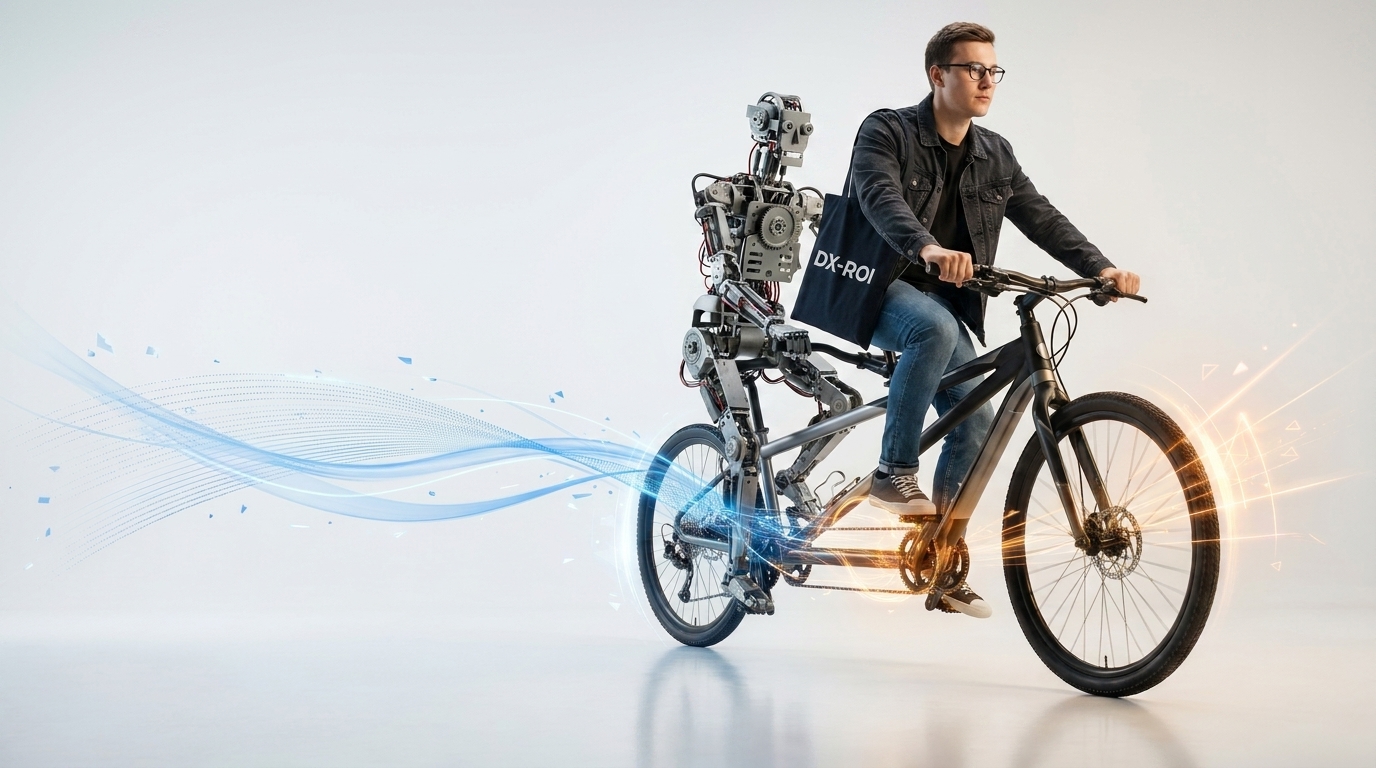
In our recent work developing and refining a Design System for a client’s corporate global redesign, we were faced with dozens of page designs and components across an Atomic Design System, including hundreds of tokenized variables, and visual and experiential design across thousands of pages of a high traffic website. Ensuring consistency in how the Design System was architected and implemented, as well as validating its structure and adherence to WCAG 2.1 Level AA standards, all took place in the context of an extremely tight timeline and exceptionally high client expectations.
The nature of that challenge may be familiar to many people working in Experience Design today. Intensive and expansive requirements; short timelines; high expectations. The complex array of tools available today might offer some hope, or it might seem like an overwhelming problem to solve in and of itself.
In 1980, Steve Jobs first referred to computers as “a bicycle for the mind.” In that interview, he clarified: computers were a tool that could take humans’ natural advantages as tool-builders and vastly scale them. Ten years later he expanded the thought; “I think we’re just at the early stages of this tool,” he said, “but already we’ve seen enormous changes. I think that’s nothing compared to what’s coming in the next hundred years.”
Almost half-way through that century, it’s understandable if we are dizzied by the impact that AI (and LLMs in particular) is having on our daily lives today. It’s useful to remember, however, that we were no less dizzied by the advent of the personal computer in the 1980s, the explosive growth of the Internet in the 1990s, the unfurling of entirely new forms of handheld computers in the 2000s, and the deep impact of social networking in the 2010s.
All that considered, the practice of Experience Design has seen some enormous shifts in just the past 6 months. If we look only at the fields of UX Research and Interaction Design, AI tooling has become an increasingly important part of how we approach the work if not the de-facto standard of practice.
I want to acknowledge that there are good reasons for deep concern about this fact, among them that; LLMs are built on data whose provenance is not accountable to fair attribution, training and inference are resource-intensive activities, and the nature of how LLMs deliver content inevitably reflects the degree to which the training data may be skewed. As Designers, we have a duty of care to be especially conscious of these facts, and to balance them accordingly in our practice of using, developing, and delivering AI-enabled tools and experiences. Experience Design is not an end into itself; it is merely a process by which the ideas and desires (of people, businesses, communities) begin to take on a shape and a form.
As one pillar of hopeful optimism on which we might build a stronger, more effective practice – a little less than a year ago I wrote that AI within the world of UX Research was “not all awful,” and that AI would likely soon be useful (if it wasn’t already) in some of the more routine and arduous tasks of transcription and summarization. Those and other blocking and tackling work – the laborious, unglamorous, and painstaking work that largely remains unseen in XD – are the foundation of building innovative, accessible, and inspiring designs. Recently, I’ve seen how Design Systems in particular can be made more consistent, faster, and more reliable, with the use of AI Tooling.
In the kind of Design System work we’re called upon to do today, with multiple teams working to produce artifacts for developers and business stakeholders on extremely short timelines, maintaining a level of consistency and accessibility adherence might seem impossible. “We’ll fix it later” might be the go-to solution.
Instead, we have leveraged a set of custom skills created in Claude and Figma’s MCP server to programmatically assess and fix issues across a rapidly evolving design system and the designs which consumed it. A separate skill provides documentation in Figma of our audit results, backlogs of work to be done, and a live Status Dashboard of the entire Atomic Design System as changes were being made.
Scanning hundreds of component instances to make sure each attribute was bound to the correct design tokens now takes minutes, not days or weeks. Leaning on these tools is not simply a matter of speeding up work – it was a matter of incorporating work into a design and development process in a way that otherwise would simply not have been possible. Most importantly – these skills and processes enabled a level of collaboration between our teams that previously would have been confined to lengthy meetings, static artifacts, and synchronized working sessions in Figma. Work doesn’t just accelerate – the nature of collaboration among and between teams changes, and consistency and accessibility improve as a result.
As AI becomes the next tool to accelerate our capabilities and our impact as designers, the chain is truly beginning to “catch the gears” of this bicycle of the mind.